English
 中文
中文 Pусский
 Español
 Français
 عربي
عربي
How Does Cold Foil Machine Enhance Print Finishing Quality?
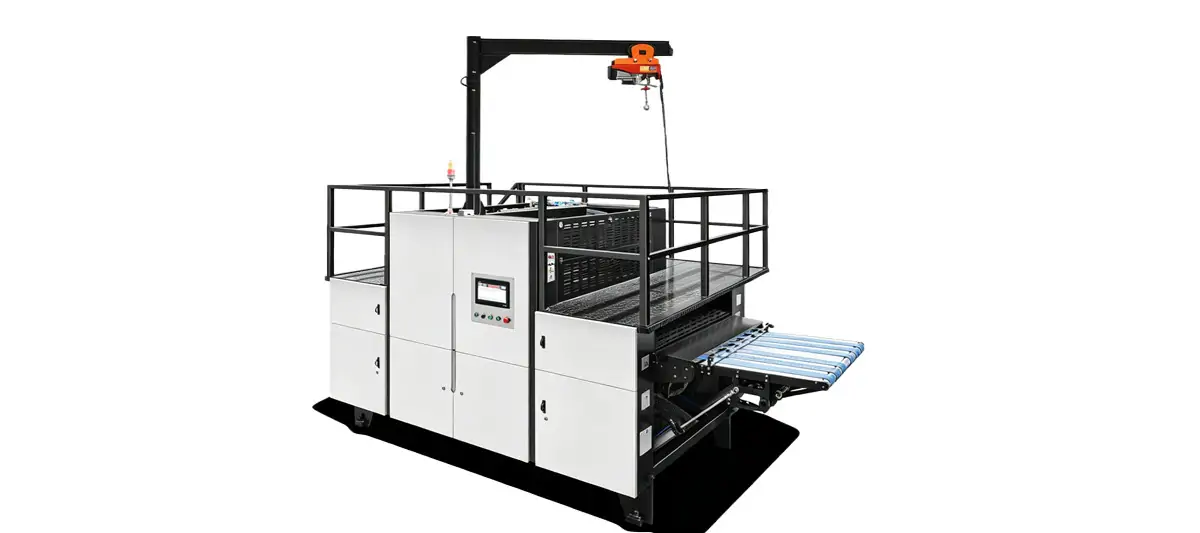
1. The Core Logic: UV Curing & Cold Foil Transfer Integration
Cold foil machines redefine print finishing by merging UV curing with cold foil transfer—an innovation that sidesteps the flaws of traditional processes. Unlike hot stamping, which relies on high temperature and pressure, this technology completes foil transfer at room temperature. This not only prevents heat damage to sensitive substrates but also streamlines the production workflow.
The process unfolds in four straightforward steps: First, UV-curable adhesive is printed onto designated substrate areas using a precision plate. Next, metal foil is laminated to the substrate under controlled pressure. Then, UV lamps activate rapid adhesive curing, bonding the foil’s metallic layer firmly to the substrate. Finally, the foil’s base film is peeled away, leaving crisp metallic patterns behind.
Environmental friendliness is another key benefit. UV curing produces no volatile organic compounds (VOCs), and unused foil can be recycled. For printers prioritising sustainable production, this makes cold foil UV technology a standout choice.
2. Four-Dimensional Quality Boost: Key Improvements from Cold Foil Machines
These machines elevate print finishing across four critical quality metrics, meeting the strict standards of high-end printing:
•Glossiness: The transferred metallic layer boasts uniform, high-brightness reflection—delivering a lush metallic sheen that traditional printing can’t match. This is thanks to UV-curable adhesive, which forms a smooth surface post-curing, ensuring tight, bubble-free foil-substrate adhesion.
•Wear Resistance: UV-cured adhesive offers exceptional bonding strength. Even after repeated friction or folding, the metallic layer remains intact, resisting peeling and fading. This is vital for printed products requiring long-term durability, such as premium packaging or frequent-use labels.
•Pattern Clarity: Anilox rollers and other precision components enable exact adhesive dosage control. This ensures fine textures and thin lines are reproduced sharply, with no edge blurring or diffusion—critical for intricate designs in high-end applications.
•Edge Neatness: The synergy between the printing plate and UV curing system eliminates burrs, a common issue with traditional processes. The result is sharp, clean pattern edges that enhance overall product refinement.
3. Synergistic Innovation: Spot UV + Cold Foil Combined Process
The combination of spot UV and cold foil has emerged as a game-changer in high-end printing, unlocking new creative possibilities. Spot UV adds a high-gloss protective layer to specific areas, while cold foil contributes metallic decoration. Together, they create rich, layered visuals and tactile contrast, making printed products more eye-catching.
This combined process excels in scenarios demanding personalisation and premium quality. It aligns with consumer expectations for exquisite packaging and helps products stand out in competitive markets. Cold foil machines support in-line overprinting of these two processes, boosting efficiency while ensuring precise registration—laying the groundwork for large-scale application.
4. Comparative Advantage: Cold Foil UV vs. Traditional Hot Foil Machines
Cold foil machines outperform traditional hot foil equipment in cost, efficiency, and substrate compatibility—driving their rapid adoption:
•Cost Efficiency: No expensive metal stamping plates are needed. Changing patterns only requires replacing the printing plate, cutting pre-production costs and shortening lead times. This is especially beneficial for small-to-medium batches with frequent design changes.
•Production Efficiency: In-line integration with printing presses merges printing and finishing into one step. This is far faster than offline hot stamping, significantly boosting overall throughput.
•Substrate Versatility: Room-temperature operation makes it suitable for heat-sensitive materials like plastic films and thin paper—overcoming the limitation of hot foil machines, which only work with heat-resistant substrates. This expands its application scope across diverse high-end printing needs.
5. Practical Guide: Key Considerations for Cold Foil Machine Selection
For printers looking to adopt cold foil UV technology, careful equipment selection is essential to ensure quality and productivity. Focus on these three core factors:
•UV Power: Proper UV power guarantees fast, complete adhesive curing—directly impacting bond strength and wear resistance. Too much power may damage substrates, while insufficient power leads to poor curing and foil peeling.
•Foil Compatibility: Different foils react differently to UV adhesives. Choose machines that work with a wide range of foil types to accommodate diverse client needs, from matte to high-gloss metallic finishes.
•Registration Accuracy: Precise registration is non-negotiable for fine patterns and combined processes (e.g., spot UV + cold foil). Opt for machines with mature registration control systems to avoid pattern misalignment or blurring.
6. Conclusion: Cold Foil Machines—A Gateway to Higher Product Value
As demand for high-end printing grows, cold foil machines have become indispensable for printers aiming to boost product added value. Their ability to enhance glossiness, wear resistance, pattern clarity, and edge neatness—coupled with cost and efficiency advantages over traditional processes—positions them as a core driver of industry innovation.
For printers seeking a competitive edge in the high-end market and aiming to meet increasingly strict client demands, exploring cold foil UV technology is a strategic move. Whether you’re looking to upgrade existing finishing effects or develop high-value new products, these machines offer reliable, high-performance support.
If you want to gain an advantage in the high-end printing market and meet the increasingly stringent customer needs, it is time to explore the application potential of cold foil UV technology. Contact JINBAO for a professional solution!
AI Identification: This article was created with AI assistance, and the AI generation ratio is less than 30%.