English
 中文
 Pусский
 Español
 Français
 عربي

Servo vs Mechanical Screen Printing Machines: Which Drive System Fits Your Production?
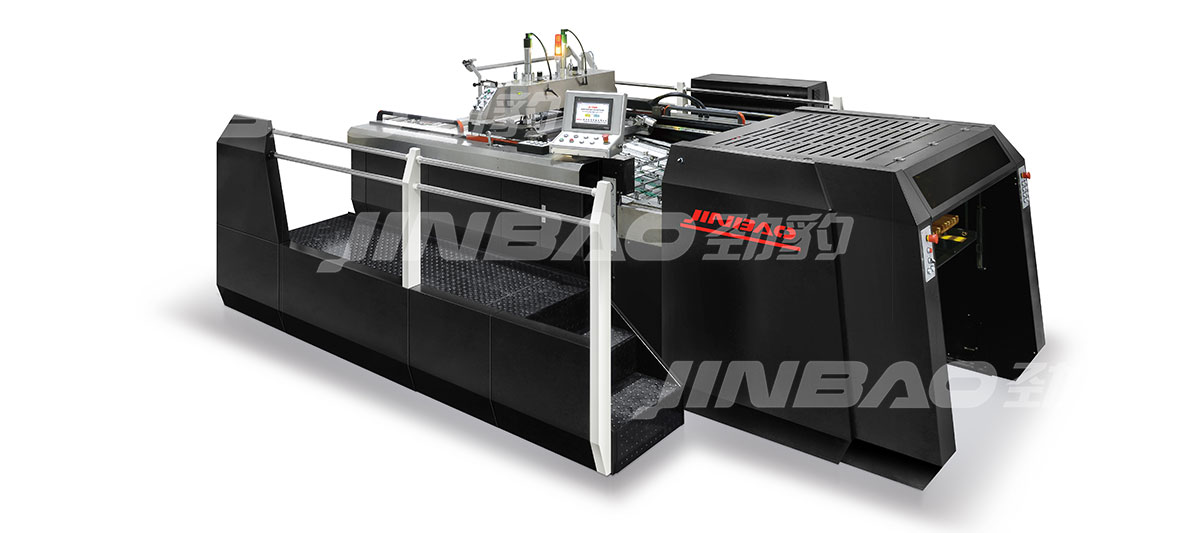
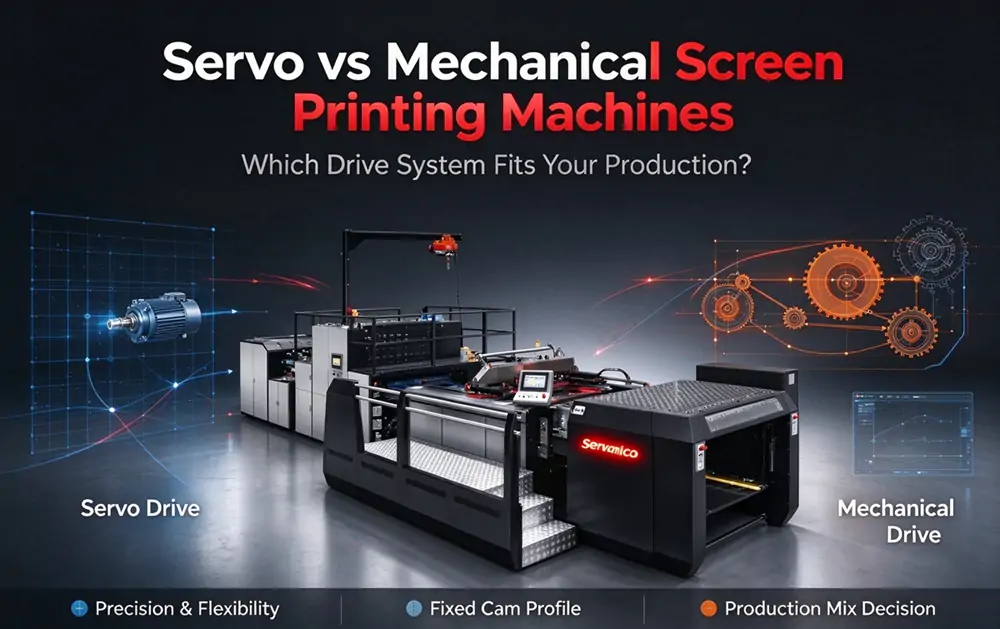
The drive system is one of the most important—and often misunderstood—factors in selecting a full automatic screen printing machine. At its core, the choice is between programmable electronic control and fixed mechanical linkage. A servo system uses individual motors and digital controllers to govern the motion of the feeder, cylinder, squeegee, and take-off mechanisms. A mechanical system uses a main motor connected to a series of cams, gears, and linkages that synchronize every movement based on a fixed physical profile.
Important distinction: Automation level and drive system are two separate dimensions. A machine can be "full automatic" in terms of feeding and stacking, while using either a servo drive system or a mechanical drive system for its motion control. This guide focuses specifically on the drive system—how the machine moves—rather than its level of automation.
Neither system is universally superior. The right choice depends on your production mix, quality requirements, maintenance capabilities, and long-term growth plans. This guide explains how each drive system works, compares their practical differences, and provides a framework for deciding which one suits your shop.
How a Mechanical Drive System Works
In a mechanical screen printing machine, a single main motor drives a central camshaft. As the camshaft rotates, cams push against followers connected to various linkages. These linkages control the timing of the feeder, the rotation of the cylinder, the stroke of the squeegee, and the action of the take-off grippers.
Because all movements are tied to the physical shape of the cams, the machine's motion profile is fixed. Once the machine is designed and built, the acceleration, deceleration, and dwell timing at each station cannot be changed. This design is proven, robust, and relatively straightforward to maintain. However, it lacks flexibility—the machine runs at a single rhythm regardless of the substrate or job type.
How a Servo-Driven System Works
A servo-driven machine replaces the central camshaft and mechanical linkages with individual servo motors at key stations. These motors are controlled by a programmable logic controller (PLC) or motion controller, which dictates the exact position, speed, and acceleration of each moving part at any given millisecond.
Because the motion is controlled by software rather than hardware, the machine's behavior can be adjusted per job. Operators can select different motion profiles for paper, board, or film through the human-machine interface (HMI). The machine can accelerate faster, move smoothly, and optimize the non-printing portions of the cycle to maximize throughput. For a broader understanding of how these systems integrate into the full machine, review the automatic screen printing machine guide.
Key Differences Between Servo and Mechanical Drives
The practical differences between these two systems affect everything from setup time to daily output and long-term maintenance. The table below summarizes the main points of comparison.
| Factor | Servo-Driven | Mechanical |
|---|---|---|
| Motion Control | Programmable per job | Fixed by cam design |
| Registration Accuracy | Higher (precise electronic positioning) | Moderate (depends on mechanical wear) |
| Job Changeover Time | Fast (recall settings from memory) | Slower (manual mechanical adjustments) |
| Maximum Speed | Higher (optimized acceleration curves) | Fixed by mechanical limits |
| Substrate Flexibility | High (easy to adjust for different materials) | Limited (must compromise settings) |
| Maintenance | Fewer wear parts, but requires electronic diagnostics | More lubrication and wear-part replacement |
| Initial Cost | Higher | Lower |
| Energy Consumption | Lower (motors draw power only when moving) | Higher (continuous motor load) |
Why Servo Drives Improve Registration and Speed
In a mechanical machine, the squeegee stroke is tied to the cam profile. It accelerates and decelerates according to a fixed curve. In a servo machine, the controller can command the squeegee to accelerate rapidly, maintain a constant speed during the ink transfer phase, and then retract quickly. This reduces the total cycle time without sacrificing print quality.
Furthermore, servo motors maintain precise positional accuracy even under varying loads. If a thicker substrate enters the machine, the servo system detects the increased resistance and adjusts the torque accordingly to maintain the correct speed. This consistency translates directly into tighter registration and fewer misregistered sheets across a long run.
Maintenance and Long-Term Reliability
Mechanical drives are praised for their repairability. When a bearing wears out, or a cam follower breaks, a skilled maintenance technician can replace the part and adjust the linkage. The principles are mechanical and can be understood by anyone familiar with industrial machinery.
Servo drives have fewer mechanical wear items. There are no cams to wear out, no gearboxes to lubricate, and fewer bearings to replace. However, when a servo motor or drive controller fails, the diagnosis requires specialized electronic knowledge and proprietary diagnostic tools. While such failures are relatively rare, they can lead to longer downtime if your maintenance team lacks the necessary training.
To ensure long-term reliability with either system, strict adherence to the manufacturer's maintenance schedule is essential. For spare parts, technical support, or maintenance documentation, visit the service center.
Energy Efficiency and Operating Costs
A mechanical machine requires the main motor to run continuously, driving the entire camshaft and all connected mechanisms, even during the non-printing portions of the cycle. This results in a constant energy draw that is relatively high.
A servo-driven machine uses independent motors that only draw significant power when they are accelerating or doing work against a load. During dwell periods, power consumption drops significantly. Over multiple shifts and years of operation, this difference in energy efficiency can contribute to a lower total cost of ownership for the servo machine.
How to Choose: Application Scenarios
To determine which drive system is right for your shop, evaluate your typical production profile against these scenarios.
When a Servo-Driven Machine Makes Sense
- High-Mix, Low-Volume Production: If you frequently change job sizes, substrates, and designs, the fast setup and programmable memory of a servo system will drastically reduce downtime.
- High-Value Printing: For electronic components, cosmetic packaging, or premium labels where registration accuracy is critical, the precision of a servo system minimizes rejects.
- Heat-Sensitive Substrates: If you run plastics or thin films, the ability to fine-tune acceleration curves prevents sheet distortion and slippage.
- Shops Prioritizing Labor Savings: Servo systems are easier to automate fully, requiring less skilled operator intervention for adjustments.
When a Mechanical Machine Makes Sense
- Long Runs of Standard Jobs: If you run the same few jobs on the same substrates day after day, the fixed rhythm of a mechanical machine is perfectly adequate and highly efficient.
- Budget Constraints: The lower initial capital cost of a mechanical machine frees up funds for other equipment or working capital.
- In-House Mechanical Expertise: If your maintenance team is highly skilled in mechanical repair but lacks electronic diagnostics experience, the mechanical machine will be easier to keep running.
Frequently Asked Questions
Is a servo-driven machine always faster than a mechanical one?
Not necessarily in terms of raw maximum rated speed, but it is usually faster in effective production. A servo machine can accelerate and decelerate more aggressively, reducing the non-printing time in each cycle. This means it can often achieve higher real-world output, especially on complex jobs or when frequent changes require the machine to stop and start.
Can a mechanical machine be upgraded to servo later?
In almost all cases, no. The structural design, control cabinet, and mechanical linkages of a mechanical machine are fundamentally different from a servo system. Converting one to the other is not economically or practically viable. You must decide on the drive system at the time of purchase.
Do servo systems require a more stable power supply?
Yes. Servo drives are sensitive to voltage fluctuations and electrical noise. A clean, stable power supply with proper grounding and surge protection is essential. Mechanical machines are generally more tolerant of poor power quality, though they still benefit from a stable supply.
How does the drive system affect ink deposit consistency?
The drive system affects the speed and smoothness of the squeegee stroke. A servo system can maintain an exact, constant speed during the print stroke, which results in a more uniform ink deposit. A mechanical system relies on a fixed cam profile, which may introduce slight speed variations that affect ink transfer.
Which drive system requires more operator training?
Servo systems require operators to be comfortable using digital interfaces (HMIs) to recall jobs and set parameters. Mechanical systems require operators to make physical adjustments (knobs, handwheels, and cams). The training focus is different, but neither is inherently more difficult for a dedicated operator to learn.
Next Steps
The decision between servo and mechanical drives ultimately comes down to how you plan to run your business. If you are positioning your shop for high-mix, high-precision work, the servo machine is the clear long-term investment. If you focus on high-volume, standard production and have tight initial capital constraints, a mechanical machine will serve you well.
To see how these machine configurations fit into a complete production workflow with auxiliary equipment, explore the available solutions and system configurations.
If you are ready to discuss your specific production mix and determine which drive system is most cost-effective for your operation, contact us to discuss your material and production needs.