English
 中文
 Pусский
 Español
 Français
 عربي

What Materials Can Automatic Screen Printing Machines Print?
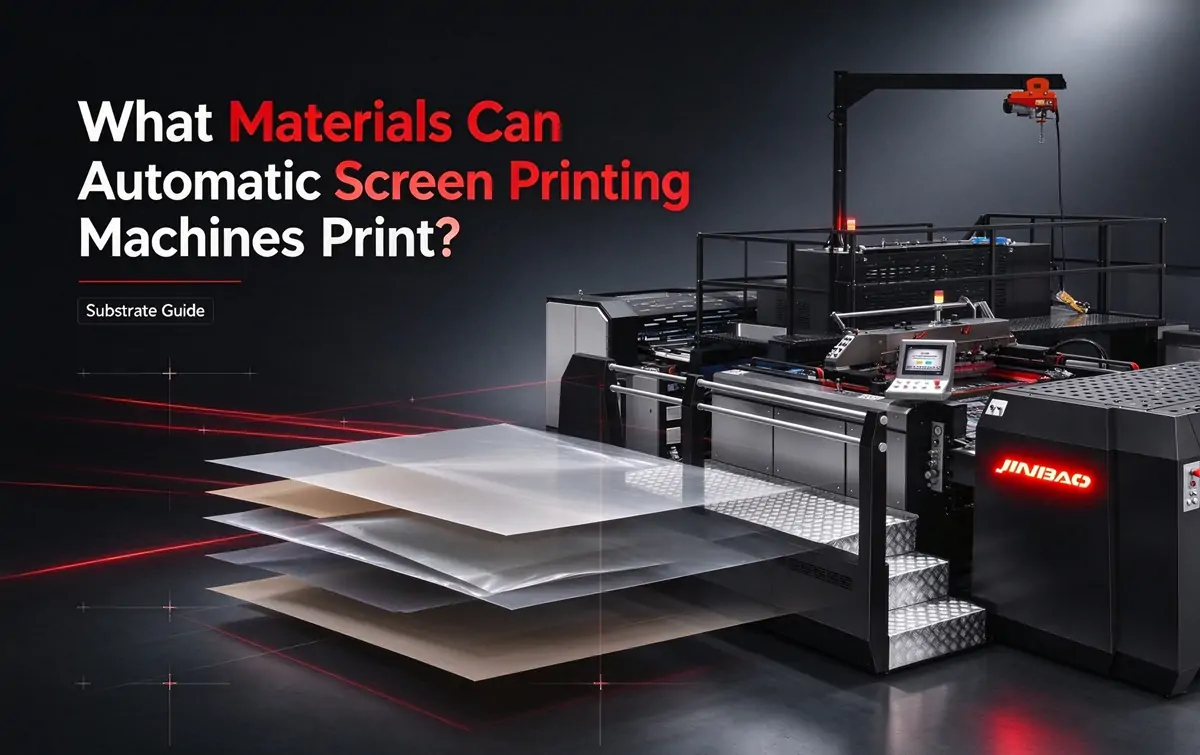
An automatic screen printing machine can handle a remarkably wide range of substrates—from thin decal paper as delicate as 0.05mm to rigid paperboard several millimeters thick. However, the specific material range a machine can process depends on its feeder design, transport system, registration mechanism, and curing configuration. A machine optimized for lightweight paper may struggle with heavy board, and a machine designed for flat plastic sheets may not feed self-adhesive label stock reliably.
Understanding how different substrates interact with the machine's mechanical systems is essential for buyers evaluating equipment and for operators troubleshooting production issues. This guide breaks down the main material categories, the handling requirements for each, and the machine features that matter most.
1. Paper: The Most Common Substrate
Paper is the most widely used substrate in automatic screen printing. Its consistent thickness, smooth surface, and predictable feeding behavior make it ideal for high-speed automation.
Typical Paper Types
- Coated art paper: Smooth surface for fine detail and high-resolution graphics. Common in posters and commercial printing.
- Uncoated offset paper: More absorbent, requiring higher ink deposit. Used in book covers and specialty packaging.
- Decal transfer paper: Thin, water-soluble release layer. Requires gentle feeding and humidity control.
- Label stock (paper-based): Self-adhesive paper with a release liner. Requires specialized feeder settings to prevent adhesive buildup.
Machine Considerations for Paper
Paper can generally be fed at high speeds—4,000 sheets per hour or more on compatible machines. However, lightweight papers (under 100 gsm) are prone to static buildup and double-sheet feeding. Suction feeders with adjustable blow air and double-sheet detection are essential. Static elimination devices (ionizing bars) are recommended for very light or coated stocks.
2. Paperboard and Folding Carton Stock
Paperboard is the dominant substrate in packaging applications—folding cartons, cosmetic boxes, wine boxes, and gift boxes. It is thicker and stiffer than paper, which affects both feeding and registration.
Typical Paperboard Types
- Coated folding boxboard (FBB): Smooth, printable surface. Common in cosmetic and pharmaceutical packaging.
- Solid bleached sulfate (SBS): High-quality, bright white board. Used in premium packaging.
- Recycled board: More variable surface and thickness. May require feeder adjustments for consistent feeding.
- Corrugated board (thin flute): Used in display packaging. Requires specialized feeder and transport systems.
Machine Considerations for Paperboard
Heavier board requires slower feeding and gentler handling. A machine that runs paper at 4,000 sheets per hour may run at 2,000–2,500 sheets per hour on thick board. The registration system must be robust enough to hold the stiffer sheet securely—gripper pressure and vacuum suction may need adjustment. Off-contact distance may also need to be increased to accommodate the board's rigidity.
3. Plastic Sheets and Films
Plastic substrates—including PET, PVC, polycarbonate, and polypropylene—are used in membrane switches, electronic components, specialty packaging, and signage.
Typical Plastic Substrates
- PET (polyester): Dimensionally stable, good for fine detail. Common in membrane switches and electronic displays.
- PVC: Flexible and cost-effective. Used in signage, labels, and packaging.
- Polycarbonate: High impact resistance. Used in industrial labels and control panels.
- Thin films (under 0.2mm): Require specialized handling to prevent wrinkling and static buildup.
Machine Considerations for Plastics
Plastic substrates present unique challenges: static electricity, surface scratching, and heat sensitivity. Anti-static devices are essential—static can cause sheets to stick together, attract dust, and misregister. The feeder must be gentle enough to avoid scratching the surface. If UV curing is used, the substrate must be compatible with the UV ink and curing process (some plastics are heat-sensitive and may deform under high-intensity UV lamps).
4. Labels and Stickers
Self-adhesive label stock is a major substrate category for automatic screen printing. It combines a printable face stock with an adhesive layer and a release liner.
Typical Label Constructions
- Paper face stock: Most common. Smooth or textured surface for different visual effects.
- Film face stock (PET, PP, PE): Water-resistant and durable. Used in beverage, chemical, and industrial labels.
- Clear film: "No-label look" on transparent containers. Requires high registration accuracy and clean printing.
Machine Considerations for Labels
Label stock presents unique feeding challenges. The adhesive can stick to feed plates and rollers, especially in warm environments. The release liner must be handled carefully to avoid delamination. Machines designed for label printing often include specialized feeder components (adhesive-resistant coatings, chilled rollers) and web tension control for roll-to-roll configurations. For sheet-fed label production, double-sheet detection and static control are critical.
5. Decal Paper
Decal paper is used for ceramic, glass, and heat-transfer decals. It is typically a thin, lightweight paper coated with a water-soluble release layer.
Typical Decal Types
- Water-slide decal paper: Released by soaking in water. Used for ceramics and glass.
- Heat-transfer decal paper: Released by heat and pressure. Used in textile and industrial applications.
Machine Considerations for Decals
Decal paper is thin and lightweight—typically 60–100 gsm—which allows high feeding speeds. However, the water-soluble coating makes it highly sensitive to humidity. In humid environments, the paper can curl or stick together. Climate control (maintaining 45–55% relative humidity) is essential. The feeder must be gentle to avoid cracking the coating, and registration must be precise—decal printing often involves multiple colors in perfect register.
6. Electronic Materials
Screen printing is widely used in electronics manufacturing for printing conductive inks, thick-film pastes, and dielectric layers. The substrates in this category are often small, fragile, and expensive—requiring the highest levels of precision and care.
Typical Electronic Substrates
- Ceramic substrates (alumina, LTCC): Used in thick-film circuits and sensors. Very flat and rigid.
- PCB substrates (FR-4, polyimide): Used in printed circuit boards and flexible circuits.
- Membrane switch layers (PET, PC): Thin films printed with conductive and dielectric inks.
- Glass substrates: Used in displays and touch panels.
Machine Considerations for Electronics
Electronic printing demands exceptional registration accuracy (typically ±0.05mm or better), consistent ink deposit thickness, and a clean production environment. The machine must have precise tension control for thin films, gentle handling for fragile ceramic substrates, and a registration system capable of detecting small alignment marks. Anti-static devices are essential to prevent electrostatic discharge (ESD) damage to sensitive components.
Substrate Comparison Table
| Substrate | Typical Thickness | Feeding Challenge | Key Machine Feature | Typical Speed |
|---|---|---|---|---|
| Paper | 0.05–0.3mm | Static, double sheets | Suction feeder, ionizer | High (4,000+ sph) |
| Paperboard | 0.3–1.0mm | Stiffness, weight | Robust gripper, vacuum | Moderate (2,000–3,000 sph) |
| Plastic sheets | 0.1–1.0mm | Static, scratching | Anti-static, gentle feed | Moderate |
| Labels | 0.1–0.3mm | Adhesive buildup | Specialized feeder, liner control | Moderate–High |
| Decal paper | 0.05–0.1mm | Humidity, curling | Climate control, gentle feed | High |
| Electronic materials | 0.1–1.0mm | Fragility, precision | High-accuracy registration | Low–Moderate |
What Substrates Can a Machine Handle?
The substrate range of an automatic screen printing machine is determined by three main factors:
- Feeder design: Suction feeders handle a wider range of thicknesses and surface types than friction feeders. Some machines offer interchangeable feeder heads for different substrate categories.
- Transport system: Gripper systems must be adjustable for different sheet thicknesses. Vacuum suction may be needed for thin or porous substrates.
- Registration system: Sensor-based registration systems can handle a wider range of substrates than mechanical systems, as they do not rely on physical contact with the sheet edge.
For a broader overview of how different machine types handle various substrates, see the automatic screen printing machine guide.
Common Substrate Handling Problems
- Double-sheet feeding: Common with thin paper and plastic film. Caused by static, insufficient blow air, or worn feed rollers. Solution: increase blow air, install ionizer, replace rollers.
- Sheet skew: Caused by uneven side guide pressure or misaligned front lays. Solution: adjust guides and lays, verify with test sheets.
- Adhesive buildup (labels): Caused by adhesive transfer to feed plates and rollers. Solution: use adhesive-resistant coatings, clean regularly, control ambient temperature.
- Curling (decal paper): Caused by humidity changes. Solution: maintain stable humidity, store paper in sealed bags, condition before printing.
- Surface scratching (plastics): Caused by rough handling or dirty feed components. Solution: clean feed path, use gentle suction, avoid metal contact points.
Frequently Asked Questions
Can one machine handle both paper and plastic sheets?
Yes, most automatic screen printing machines can handle both paper and plastic sheets within their thickness range. However, switching between substrate types may require feeder adjustments, anti-static devices, and different curing settings. Some machines offer quick-change feeder components for faster changeovers.
What is the thinnest substrate an automatic machine can handle?
Most automatic screen printing machines can handle substrates down to 0.05mm (50 microns), such as thin decal paper or PET film. Handling very thin substrates requires careful feeder adjustment, low suction pressure, and anti-static measures to prevent double-sheet feeding and wrinkling.
Can automatic screen printing machines print on corrugated board?
Thin-flute corrugated board can be handled by some automatic screen printing machines, but it requires a specialized feeder and transport system. Standard machines designed for paperboard may not handle the thickness and surface irregularity of corrugated board reliably. Buyers should verify corrugated capability with the supplier before purchasing.
How does substrate thickness affect production speed?
Thicker substrates generally require slower feeding and transport, reducing maximum production speed. The relationship is not linear—doubling the thickness may reduce speed by 30–50%, depending on the machine design and feeder capacity. Always ask for sustained production rates on your specific substrate.
What machine features are essential for electronic substrate printing?
Electronic printing requires high-accuracy registration (typically ±0.05mm or better), precise squeegee pressure control, consistent ink deposit, anti-static devices, and a clean production environment. Some machines offer specialized options for electronic printing, such as vacuum tables for thin films and non-contact transfer systems for fragile substrates.
Next Steps
Substrate selection is one of the first decisions in machine specification. Before contacting a supplier, identify your primary substrate types, thickness ranges, and any special handling requirements (static, humidity, fragility). This information allows the supplier to recommend the appropriate feeder, transport, and registration configuration.
For a broader understanding of machine types and selection factors, review the automatic screen printing machine guide. If you have specific substrate requirements, discuss your material and production needs directly with the supplier to confirm the appropriate configuration.